

The Ukraine War
Russia's depraved and criminal war on an innocent European country enters its fifth year. You're invited to a symposium with Vladislav Davidzon.

Four years ago this week, the world watched the return of something it had believed consigned to history—a large-scale war of conquest in Europe. In the early hours of February 24, 2022, the post-Cold War settlement cracked. The war has been unspeakably cruel and bloody. Its outcome will determine the world’s future.
At the time, many assumed that Ukraine would quickly collapse. It didn’t. Instead, we’ve seen four years of attrition, adaptation, miscalculation, technological improvisation, sanctions, and stalemate. The war has made certain things abundantly clear: the persistence of Russian imperial ambition, the inadequacy of Europe’s defense arrangements, the strategic dementia of the United States. It has also revealed Ukraine’s extraordinary resilience and capacity for improvisation, as well as a heroism—and societal mobilization—that few predicted. (Some did. Those who predicted it should be the people to whom we now turn for insight about Ukraine.) In this week’s symposium, we’ll ask: What kind of war has this become? And what kind of order is emerging from it?
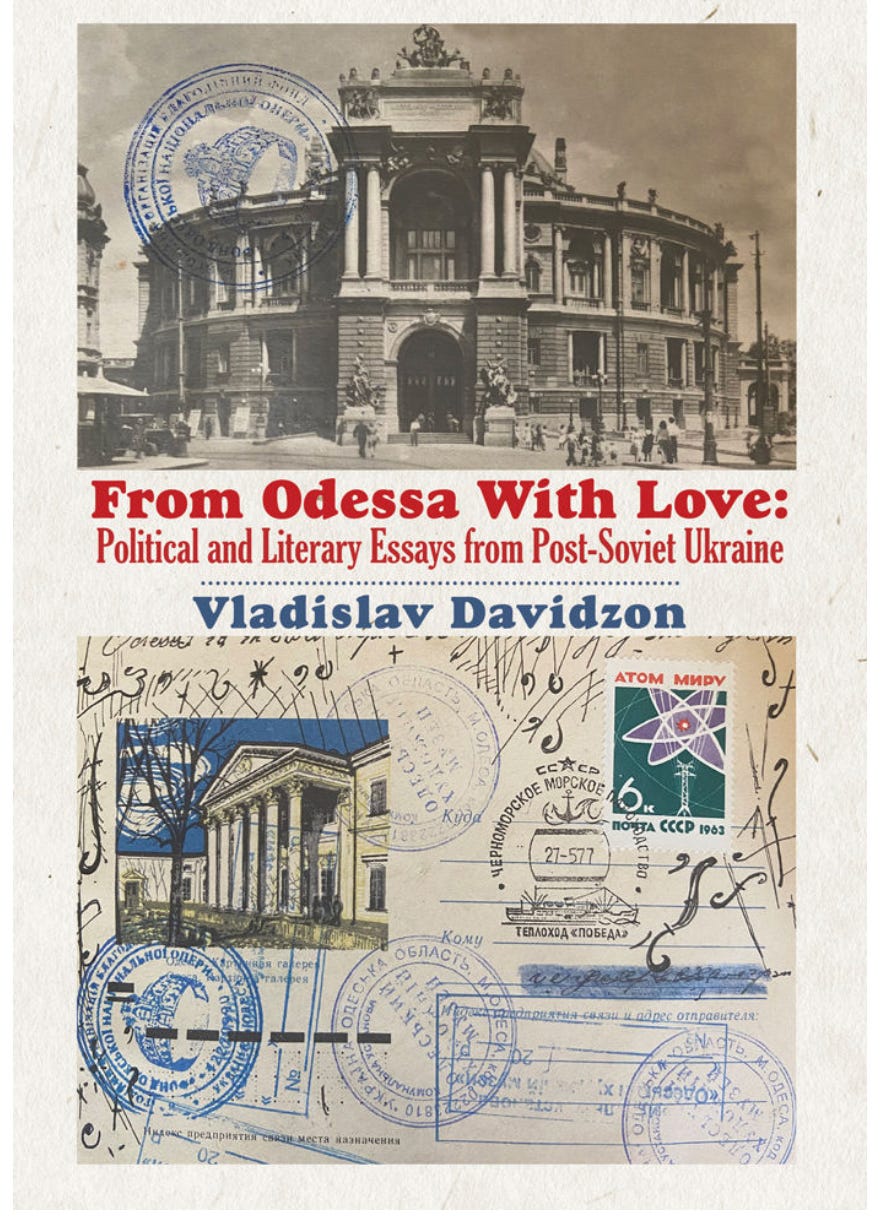
We have the good fortune of having Vladislav Davidzon, author (among other things) of From Odessa with Love, as our guest. As you’ll know from our podcasts over the years, he’s been watching, reporting, thinking, and explaining this war from the beginning. On Sunday, I’ll be asking him to tell us what he believed in 2022 that he no longer believes; what Western analysts still misunderstand; and what he thinks the next two years are most likely to bring.
Podcasts with Vlad—which are optional, but you might enjoy them:

The reading list is short, but it is not optional. It is mandatory. All of it. I deliberated about making an issue of this—do my subscribers really want a lecture from me? I doubt it!—but I concluded that I have to, because otherwise it isn’t fair to the people who do finish the reading, or to our guests. It’s hard to have an intelligent conversation if no one’s done the reading. When I ask speakers to join us, I always do so with the promise that this is like no group they’ve ever spoken to before: They do the reading. That’s a significant attraction, for a guest—as anyone who does a lot of teaching or speaking knows, it’s a lot more fun to talk to people who already have a grasp on the basics.
I know I sound like a scold. But trust me, it’s just a better experience—for you, for the group, for the guests—if you’ve done the reading. So I decided to say so, even at the risk of discouraging people from joining us. I’d rather have a small group of people who’ve done the reading than a large group that hasn’t.
Lecture over. I do understand that the reading lists I’ve assigned have been unmanageably long—and that it’s already Friday. So this reading list is very short. I just personally read every word of it to be sure it was possible to read it in less than an hour. Even if we assume I read five times faster than an average reader, it should be perfectly manageable to read this before Sunday. It won’t take you longer than reading a newspaper once took, back in the days when we read newspapers.
The Zoom link is below.
MANDATORY READING
The Russo-Ukrainian War, by Serhii Plokhy. Please read the preface and first chapter. (The link takes you to a Google Books free copy.)
Articles:
“Russia’s War in Ukraine: Identity, History, and Conflict,” by Jeffrey Mankoff.
“Russia’s War in Ukraine as a ‘War for Identity,’” by O. Mishalova.
The Kyiv Post. Please read three headline stories (the ones that most interest you) today, tomorrow, and on Sunday.
And if you didn’t read this when I cross-posted it the other day:

STUDY QUESTIONS
Is this a post-imperial war?A revanchist war? A civilizational war? A conventional territorial war? To what extent is ideology driving this war?Could it have been avoided through security concessions alone?
What kind of war has this become? Attritional? Frozen? Adaptive? What does that imply about time horizons? Has the character of warfare in Ukraine validated or falsified pre-2022 assumptions about modern war?
Has the war strengthened or weakened European strategic coherence?
If Ukraine prevails militarily but remains economically shattered, is that victory?
Four years in, what is the most realistic end state? Negotiated settlement? Frozen conflict? Russian collapse? Ukrainian breakthrough? Perpetual attrition? Assign probabilities.
OPTIONAL
(This is a whole series—I haven’t watched the rest, but I assume it’s good.)
Timothy Snyder’s whole class is worth watching:
