

The Balancing Act
Asia isn’t choosing between America and China. It’s preparing for a world in which it can’t fully trust either one.

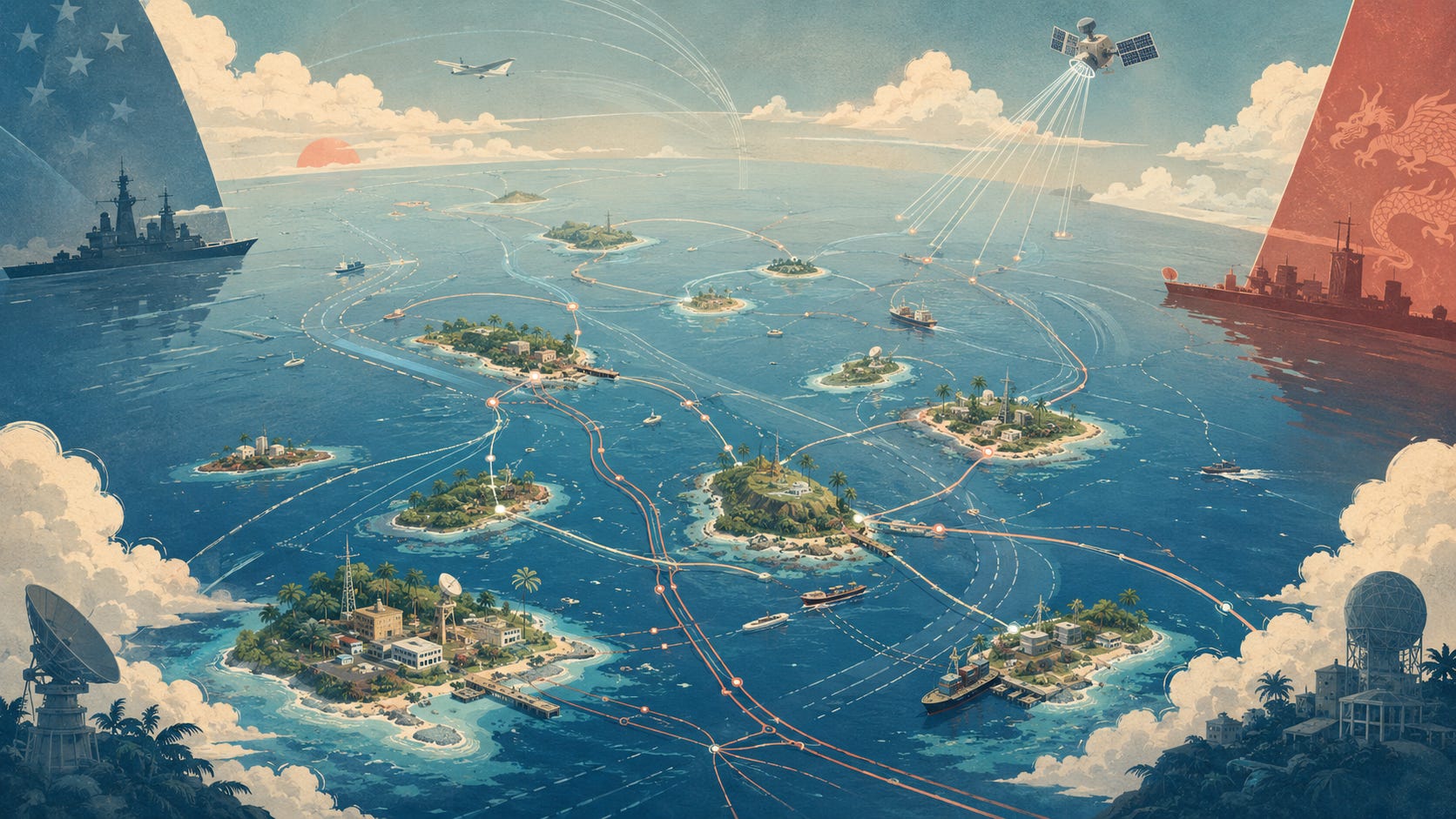
By Vivek Y. Kelkar
The Indo-Pacific’s anxieties were on display last week. In New Delhi, the Quad announced initiatives to build Pacific infrastructure, integrate the surveillance capabilities of the Quad countries, strengthen supply chains for critical minerals, and build regional resilience. Days later, at the Shangri-La Dialogue in Singapore, US Defense Secretary Pete Hegseth warned that China was becoming more assertive. He urged Asian partners to strengthen their collective deterrence. Beijing answered by accusing Washington of promoting bloc politics and trying to contain China’s rise.
Together, the two meetings illustrated the concern now shaping strategy across Asia: how to manage a more assertive China while hedging against an unpredictable United States. Can governments across Asia still rely on Washington as the principal guarantor of regional stability? The doubt is no longer theoretical. The United States remains militarily powerful, but it is also overstretched, polarized, transactional, and inconsistent toward its allies. Meanwhile, China is no longer merely a rising power seeking influence. Beijing is now trying to shape the future of the Indo-Pacific’s maritime, technological, and economic order.
