

Green Funds, Red Flags
Sergei Cristo joins our symposium to discuss Russian subversion, ESG delusions, and the Western financial system’s habit of mistaking authoritarian risk for an emerging-market opportunity.

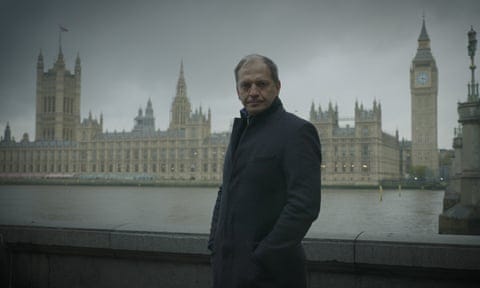
Sergei Cristo will be our guest this coming Sunday, June 14, at the usual time: 16:30 Paris time. As always, the Zoom link is below the paywall.
📚 ❗️I’m copying and pasting the introduction to Sergei that I sent to you a few days ago (when I sent you a note asking if you might be free to meet on a weekday). But please keep reading anyway, because I’ve also added Sergei’s reading list and his study questions.

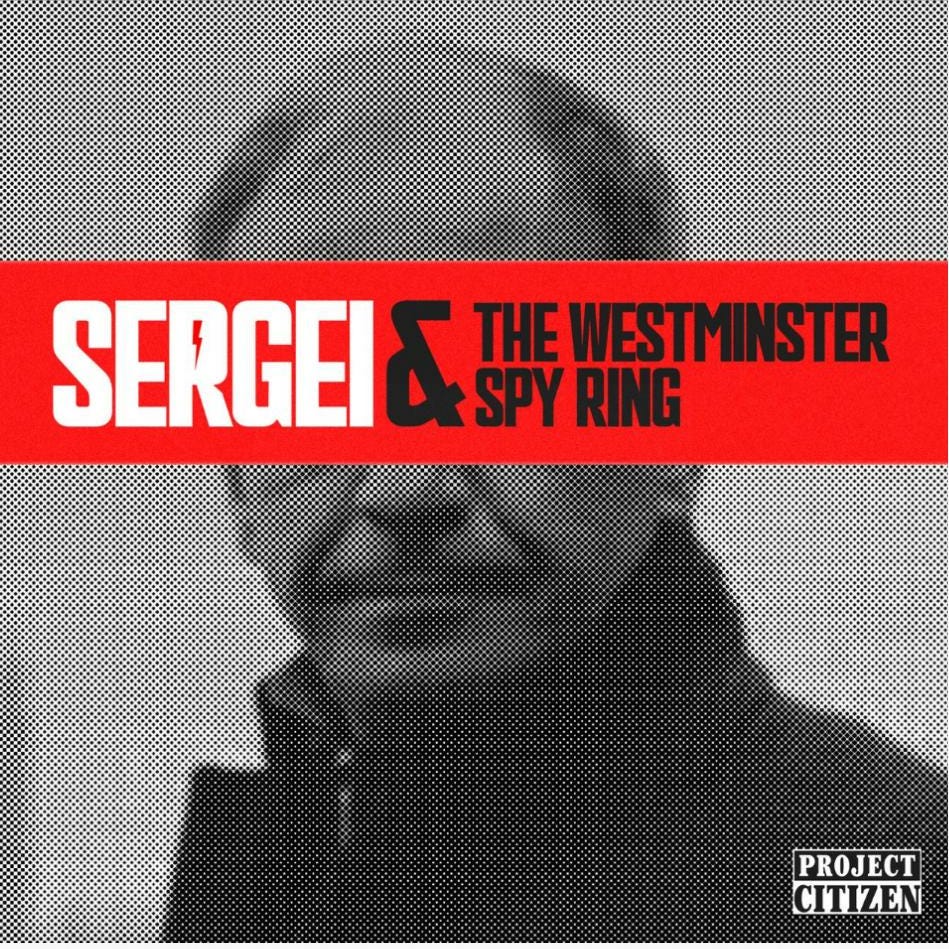
Sergei is known, among other things, as the star of the podcast Sergei & the Westminster Spy Ring, in which he helped to expose Russia’s interference in British politics.
Here’s a review of that podcast from the Guardian:
The indomitable Carole Cadwalladr of this parish and the equally dogged Peter Jukes of Byline Times have joined forces to make the new podcast Sergei & the Westminster Spy Ring, an investigative series that tells a modern tale of Russian influence in and on the UK. The blurb informs us that “not since the reach of the Cambridge spy ring … has the Kremlin been so successful in penetrating the highest echelons of British intelligence.” Yep, we’re talking spies. But this is no all-action Bond tale; instead, it concerns Russia’s gradual infiltration of the UK’s political hierarchy.
The story is built around Sergei Cristo, a Russian-born British citizen who came to the UK in the 90s and worked as a fundraiser/activist for the Conservative party. About 15 years ago, Cristo met diplomat Sergey Nalobin, whose father had been in the KGB. Nalobin seemed keen to find out if any politicians might be interested in forming a Conservatives for Russia group. Suspicious, Cristo gave him nothing but watched as Nalobin gradually parlayed his way into making Tory friends and influencing people.
By episode two, Cristo is seriously worried but can’t seem to get either the Metropolitan police or MI5 interested. The Conservative Friends of Russia group is launched with a big party and bad jokes about Pussy Riot. But it’s in the third episode, released last Tuesday, that things properly get going. It’s 2012, and political bloggers and strategists, as well as politicians themselves, are busily wooed by Nalobin and friends. Russia wants to know how to use the internet for election campaigning. “They basically opened up all their learnings to Russia,” says one person who was there. This is soft power with hard consequences (episode 4 will cover Brexit), and Sergei & the Westminster Spy Ring, though a little slow at times, does a great job of unpicking sexy Russian obfuscation and Tory and MI5 slackness to reveal what’s actually been in plain sight for years. Recommended.
(I didn’t think it was slow at times. I thought it was riveting the whole way through, and I’d heard the whole story before, too. It’s really well done.)
Following his encounter with Nalobin, Sergei decided that he wanted to understand this phenomenon in depth. He’s now getting a Ph.D. in Security and Intelligence Studies at Buckingham University. His research focuses on the way Western capital supports authoritarian regimes, ultimately undermining the liberal democracies whose openness gave investors the opportunity to acquire so much capital in the first place.
His research has already exposed the way so-called “sustainable” funds poured into Russia in the run-up to the full-scale invasion of Ukraine. A few highlights from the paper he published about this, titled “When Green Turns Red: Security Implications of “Sustainable” Investments in Russia.”
… This research has uncovered enough empirical evidence to highlight at least three serious problems. First, the funds invested in Russia in the run-up to the full-scale invasion of Ukraine ran counter to the spirit and letter of sustainable investing commitments.
Second, several of the top ten European asset managers (the largest, most reputable and trusted fiduciaries of ordinary people’s savings and pensions) effectively misused their sustainable funds to help equip Putin’s war machine in various ways. It is far from a mere rhetorical point. As explained below, most of the European “sustainable” assets come from pension funds and people’s savings, and that their funded Russian investee entities enabled the Kremlin’s ambitions not only indirectly (major revenue earners for the regime and its elites) but in many cases directly (suppliers to military manufacturers, sponsors of military units, parts of state propaganda and disinformation, bankers of covert military operations abroad). Moreover, the way those entities fit within the oppressive regime was well known long before the war began in 2022, as this research illustrates.
And third, that the regulatory investment sustainability framework remains not only largely ineffective and unenforceable, but also largely unresponsive to geopolitical realities. This framework of the European Union (EU) continues to be in force, given that the European Commission effectively postponed SFDR reforms till 2027 despite accepting much criticism that it was not fit for purpose.
These points relate to the societal significance of this research. As mentioned above, much of the money that has supported oppression in Russia and around the world did not come from some evil anonymous source. It came from the savings and investments of ordinary people. It is our money. In these sustainability-conscious times, most Europeans want their investments to be used to improve the life on this planet, and not damage it. Moreover, the question of whether sustainable funds should be allowed to invest in oppressive regimes is particularly important, as the European Commission has de-prioritized its SFDR reforms initially expected in 2025, and is shelving them until at least 2027.
Sergei just launched what’s shaping up to be a great new Substack, too, focused on Russia’s subversion of Western democracies.
📌📚 READING
On “sustainable” funds equipping oppressive regimes:
Sustainable Finance Disclosure Regulation and how Green Funds ignored Russian red flags, by Sergei Cristo.
How European ESG investors helped Putin fund his war on Ukraine, a podcast with Sergei Cristo hosted by Simoney Kyriakou of the Financial Times.
When Green Turns Red: Security Implications of “Sustainable” Investments in Russia, by Sergei Cristo, published by the Center for Security and Intelligence Studies at the University of Buckingham
On the call for a full public inquiry into the Russian interference in British politics:
Russian interference in British politics: Questions that must be answered by Sergei Cristo and Mark Kieran.
“Why have we let Putin get away with it for so long?” by Paul Mason.
STUDY QUESTIONS
Russian influence and British Politics:
Is the UK’s failure to investigate Russian interference mainly a problem of secrecy, political embarrassment, institutional fragmentation, regulatory weakness, or something deeper?
Can the UK investigate Russian interference in the 2016 referendum without reopening the Brexit wound? How should the terms of reference be drawn to avoid that trap?
How should democracies think about proof in cases o foreign influence and interference? Is the evidentiary bar for proving foreign interference so high that hostile states can meddle successfully while the leaders of the countries they target intone, “There’s no evidence that foreign interference changed the outcome of the election?”
What, precisely, is the difference between espionage, influence, and subversion?
In the case described in Sergei & the Westminster Spy Ring, where should we locate Nalobin’s activities on that spectrum, and why does that distinction matter?Why are liberal democracies especially vulnerable to this kind of penetration?
To what extent are openness, pluralism, weak gatekeeping, and a preference for informal elite networks structural advantages for hostile powers?What does the story suggest about the role of social class, prestige, and social aspiration in foreign influence operations? Was the Kremlin’s success in Britain mainly a matter of ideology, corruption, naiveté, vanity? Some combination of all four?
Why do institutions so often fail to respond to early warnings? Why might the Metropolitan Police and MI5 have shown so little interest in Sergei’s warnings? Bureaucratic inertia? Evidentiary thresholds? Political caution? Class deference? Strategic myopia?
How should we understand the significance of “Conservative Friends of Russia”?
Was it just a networking vehicle, or was it part of a broader strategy of legitimacy laundering and access-building?If Russian actors were learning from British political operatives how to use the internet for election campaigning, what does that tell us about the transferability of democratic techniques into authoritarian toolkits?
On finance, ESG, and authoritarianism:
Should a fund be marketed as “sustainable” if it takes into account carbon metrics but doesn’t calculate the risk of supporting dictators, kleptocracy, censorship, surveillance, and wars?
What does Sergei’s research reveal about the political blind spots of ESG and “sustainable” investing? Why are so many investors apparently incapable of seeing regime risk?
Can investment in authoritarian regimes ever qualify as “sustainable”?
Is this just a technical regulatory problem, or does it expose a deeper incoherence in the concept of sustainable finance?
Who bears moral responsibility when ordinary people’s savings help to sustain repressive regimes? Asset managers? Regulators? Pension funds? Retail investors? Is the responsibility too diffuse to be meaningfully assigned?
Is divestment from oppressive regimes a pointless act of moral preening?
What are the limits of regulations like the SFDR? Does Sergei’s work suggest that transparency regimes are too weak to handle geopolitical and security realities, and if so, what would a more serious framework look like?
As Sergei’s research shows, liberal democracies generate pools of capital that are then deployed in ways that weaken those very democracies. Is this a paradox, an accident, or a problem inherent to capitalism and globalization?
What remedies to these problems are imaginable and practical? Public inquiries? Intelligence reform? Political transparency rules? Financial regulation? Civic education? All of the above?
Want to join us? Not a subscriber? Why not take advantage of the free week-long trial? Come, check it out, and see if you like it:
